Cyclopædia
Assuming fishing is required, the following 24 results were found.
-
AEGIPANhttps://chambers.encyclo.eu/index.php/unclassified/AEGIPAN
AEGIPAN, in Antiquity, a Denomination given to Pan, and the Pans. See Pans. The Word is compounded of aix, aigos, Goat; as being represented with the Horns, Legs, Feet, etc. of that Animal. The Ancients also gave the Name Aegipan to a sort of Monsters...
- Type: Article
- Author: Ephraïm Chambers
- Category: Unclassified
-
ANIMALShttps://chambers.encyclo.eu/index.php/unclassified/ANIMALS
ANIMALS are ordinarily divided into terrestrial, aquatic, volatile, amphibious, Insects, etc. Terrestrial Animals are either Quadrupeds or Reptiles. Quadrupeds have either the Feet cloven, as the Bullock; or entire, as the Horse; or divided into several...
- Type: Article
- Author: Ephraïm Chambers
- Category: Unclassified
-
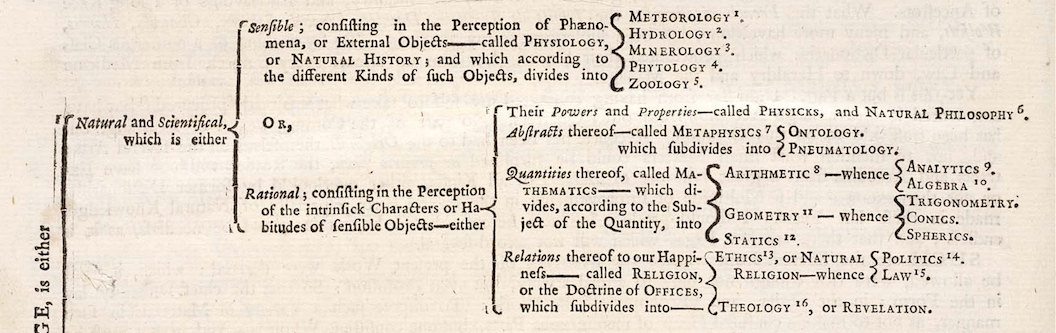
Zoologyhttps://chambers.encyclo.eu/index.php/natural-history/zoology
ZOOLOGY, or the History of ANIMALS: Their Origin in Egg, Embryo, Fœtus, Generation, Conception, Gestation, Hatching, Migration, &c. Their Kinds, as Quadruped, Bird, Fish, Insect, Reptile, Ruminant, Carnivorous, &c. Extraordinary Species, as Unicorn,...
- Type: Category
-
AMPHIBIOUShttps://chambers.encyclo.eu/index.php/natural-history/AMPHIBIOUS
his Nature seemed to be quite altered: So that he lived rather after the manner of a Fish, than a Man. See DIVING, PEARL-FISHING, &c.The Word comes from the Greek amphí, utrinque, bothways, and bíos, Vita, Life; as living in either Place.
- Type: Article
- Author: Ephraïm Chambers
- Category: Natural History